After 12 years in senior living operations and memory care programming, I’ve sat through hundreds of intake interviews and incident reviews. I’ve seen families drop their parents off with a mix of relief and crushing guilt, thinking their job is done. I’m here to tell you: your job isn't done. In fact, it’s just transitioning from "daily caregiver" to "lead advocate."
When you place a loved one in a memory care community, you are entering into a professional relationship. Like any professional contract, it requires oversight, documentation, and the occasional difficult conversation. If you want to know if a facility is truly top-tier, stop asking about their "calendar yourhealthmagazine.net of events" and start asking the hard questions. And the first one on my list? "Who is in charge at 3:00 a.m.?" If they can't answer that with the specific training and experience of the staff on duty, you have a problem.
Memory Care vs. Assisted Living: Why the Distinction Matters
A common mistake families make is treating Memory Care (MC) as just "Assisted Living (AL) with a lock." It isn't. Assisted Living is about support with activities of daily living (ADLs). Memory Care is a clinical environment specialized for cognitive decline. When you look at family engagement in memory care, you must understand that the environment is designed to manage physiological changes in the brain.
Feature Assisted Living Memory Care Staffing Ratios Lower, focused on ADLs Higher, focused on redirection/de-escalation Environment Open, residential-style Secured, specialized layout (wander management) Philosophy Choice and Independence Safety and Routine/PredictabilityDementia Behaviors are Clinical Events, Not "Attitudes"
One of my biggest pet peeves as a former program coordinator is hearing staff describe a resident as "difficult" or having a "bad attitude." When a resident with dementia strikes out, screams, or attempts to leave, that is not a behavioral problem—that is a clinical event. It is a symptom of an unmet need or a change in brain function.

When you are advocating for a parent in a facility, you must demand that the staff treat behaviors as data. Ask these questions during your next care conference:
- "What time of day did this behavior occur?" "What happened in the 30 minutes leading up to this episode?" "Is this a baseline change, or did it correlate with a new medication?"
If the answer is, "We just gave them their PRN (as-needed) medication to calm them down," you have every right to be concerned. That is not person-centered care; that is chemical restraint.
"Person-Centered Care" That Actually Works
I keep a running list of "tour phrases that mean nothing." At the top of that list is "Person-Centered Care." If a facility uses that phrase but can’t tell me your parent’s specific childhood history, their professional background, or how they prefer their coffee, they are using it as a marketing buzzword.
Real family engagement in memory care means providing the facility with a "Life Bio." Don't just give them a list of meds. Give them a narrative:
The Career Arc: If your dad was a high-powered accountant, he might feel a need to "go to the office" at 5:00 p.m. Knowing this allows staff to create a purposeful task for him, rather than just telling him to sit down. Sensory Triggers: Does loud music cause agitation? Does he hate the smell of lavender? These details are clinical data points. The Routine: If he’s always been a night owl, why are they forcing him into bed at 7:00 p.m.? That’s not for him; that’s for their staffing schedule.Technology: Safety vs. Surveillance
You’ll hear a lot about security during your tour. Ask specifically about door alarm systems and wander management technology. These are not just for keeping people in; they are for ensuring dignity.
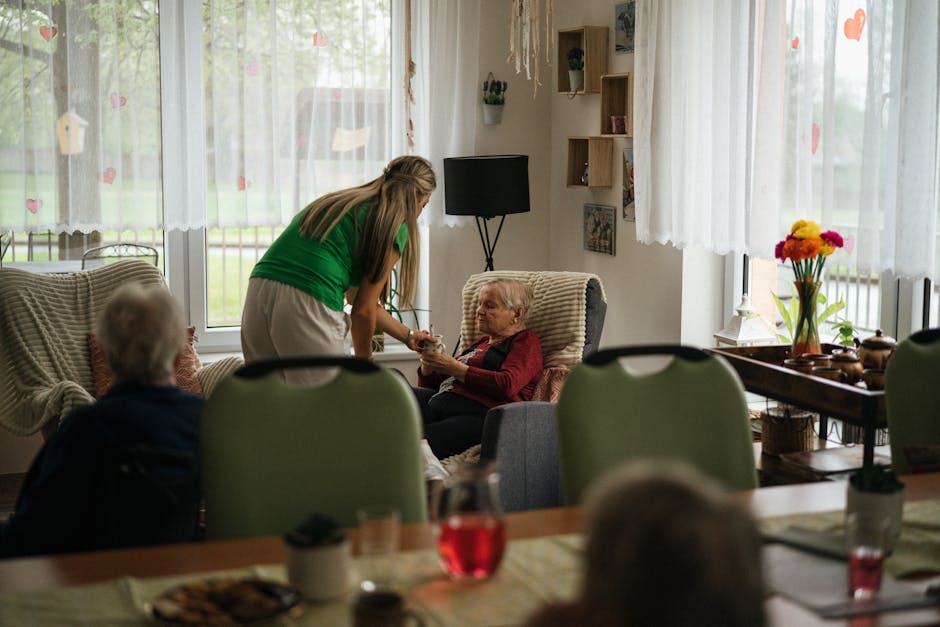
A good wander management system allows a resident to move freely through a "safe zone" without the constant feeling of being trapped. If your parent is an elopement risk, they should have an electronic bracelet that alerts staff when they approach an exit.
The Pro-Tip: Ask if the alarms are silent or audible. Loud, piercing buzzers often trigger panic in residents with dementia. A sophisticated facility uses silent paging systems to staff members so they can redirect the resident gently, rather than creating a "fire drill" atmosphere that only increases confusion.
Medication Management and the Polypharmacy Trap
This is where I see the most dangerous gaps. Many memory care residents are over-medicated—a condition called polypharmacy. When a resident is confused, they are often put on antipsychotics. These drugs have black-box warnings for elderly patients with dementia, yet they are handed out like candy in some facilities to keep the floor quiet.
When advocating for a parent in a facility, pay attention to the medication list. If a new medication is introduced, ask for the "Target Behavior." If the goal is "to help with sleep" or "to improve behavior," ask how they are measuring success. If you see a med refusal, don't just accept "they wouldn't take it." Ask: "Did they refuse because it tastes bad, because they didn't understand what it was, or because they were experiencing side effects like nausea?"
The Golden Rule: Follow Up in Writing
Memory fades, and in the world of senior living, accountability is everything. I have a firm policy: I always write follow-up emails after every meeting.
Why? Because a verbal agreement made in a care conference is often forgotten by next week’s shift change. If you have a conversation about a new fall-prevention protocol, send an email to the Director of Nursing and the Executive Director immediately afterward:
"Dear [Name], thank you for the meeting today. To confirm our discussion, we agreed that Dad would receive a physical therapy assessment by Friday and that his evening meds will be moved to 8:00 p.m. to accommodate his preference. Please confirm that these notes are in his chart."
This does three things:
- It creates a paper trail for incident reviews. It signals that you are an informed, vigilant family member (the best kind of deterrent against subpar care). It ensures that the information is actually entered into the Electronic Health Record (EHR).
Conclusion: Stay Present, Not Just Involved
Staying involved doesn't mean hovering over every staff member. It means being a partner. When you visit, don't just sit in the room. Walk the floor. Observe the lighting. Notice if the common areas are cluttered with trash or if residents look well-groomed.
And never stop asking: "Who is in charge at 3:00 a.m.?" If they stop inviting you to care conferences, or if they start getting annoyed by your questions, that is your signal to tighten your oversight, not loosen it. Your parent has moved into a facility, but they have not moved out of your family. You are the bridge between who they were and who they are now, and that is a role you can never abdicate.